Copyright © 2023 Guangdong Tongwei Machinery Co., Ltd. All Rights Reserved.
Links Sitemap RSS XML Privacy Policy
A Portable Recirculating Water Chiller is a compact and efficient cooling solution designed to maintain precise temperature control for industrial, medical, and laboratory equipment. Choosing the right model requires understanding cooling capacity, temperature stability, flow rate, application environment, and long-term operating costs. This guide provides a comprehensive overview to help engineers, buyers, and decision-makers select the optimal chiller for their specific needs while meeting modern energy efficiency and reliability standards.
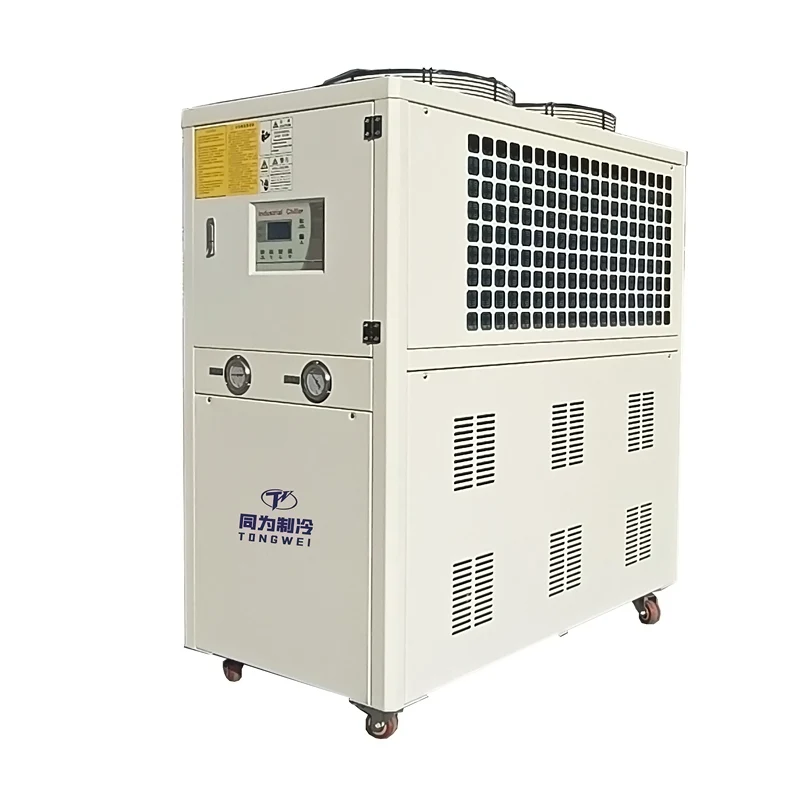
A Portable Recirculating Water Chiller is a self-contained cooling system that circulates temperature-controlled water or coolant through external equipment. Unlike centralized chillers, portable units are compact, mobile, and easy to install, making them ideal for localized cooling tasks.
These chillers are widely used in:
A portable recirculating water chiller operates using a closed-loop cooling process:
This process ensures consistent temperature control, reduces water waste, and improves equipment longevity.
Different industries rely on portable recirculating water chillers for precision and reliability:
Cooling capacity, measured in watts or BTU/hr, must match the heat load generated by your equipment.
High-precision applications may require ±0.1°C stability, while general industrial uses may tolerate ±1°C.
Ensure the chiller delivers sufficient flow and pressure to reach all cooling points effectively.
Compact designs allow flexible placement and easy relocation within facilities.
| Specification | Description | Why It Matters |
|---|---|---|
| Cooling Capacity | Heat removal capability | Prevents system overheating |
| Temperature Range | Minimum & maximum control limits | Ensures application compatibility |
| Pump Flow Rate | Water circulation volume | Improves cooling efficiency |
| Power Consumption | Electrical energy usage | Controls operating cost |
| Application | Recommended Capacity | Temperature Stability |
|---|---|---|
| Laser Equipment | 1–5 kW | ±0.1°C |
| Medical Devices | 2–10 kW | ±0.2°C |
| Industrial Machines | 5–20 kW | ±1°C |
Modern portable recirculating water chillers are designed with:
Choosing an energy-efficient model reduces carbon footprint and operational costs while supporting sustainable manufacturing goals.
Tongwei specializes in high-performance portable recirculating water chillers engineered for reliability, precision, and energy efficiency. With strict quality control, advanced thermal management technology, and customizable solutions, Tongwei products meet the demanding requirements of global industries.
Their systems are designed to align with international standards while offering long service life and low maintenance.
High-end models can achieve temperature stability as precise as ±0.1°C, ideal for sensitive applications.
Yes, provided the cooling capacity and flow rate are sufficient for the combined heat load.
Routine maintenance typically includes filter cleaning and coolant replacement every 6–12 months.
Modern designs prioritize energy efficiency, significantly reducing long-term operating costs.
Selecting the right Portable Recirculating Water Chiller is a strategic investment that enhances equipment performance, reliability, and lifespan. If you are looking for a customized, efficient, and durable cooling solution, Tongwei offers professional guidance and advanced chiller systems tailored to your needs — contact us today to discuss your application.
Copyright © 2023 Guangdong Tongwei Machinery Co., Ltd. All Rights Reserved.
Links Sitemap RSS XML Privacy Policy