Copyright © 2023 Guangdong Tongwei Machinery Co., Ltd. All Rights Reserved.
Links Sitemap RSS XML Privacy Policy
A Low Temperature Glycol Distillery Chiller is a critical component in modern alcohol production, ensuring precise temperature control during fermentation, distillation, and storage. This comprehensive guide explores how glycol chillers work, why low-temperature systems are essential for craft and industrial distilleries, how to select the right capacity, energy-saving strategies, and installation best practices. We also provide technical comparison tables, FAQs, and expert insights to help distillery owners optimize performance, product quality, and operational efficiency.
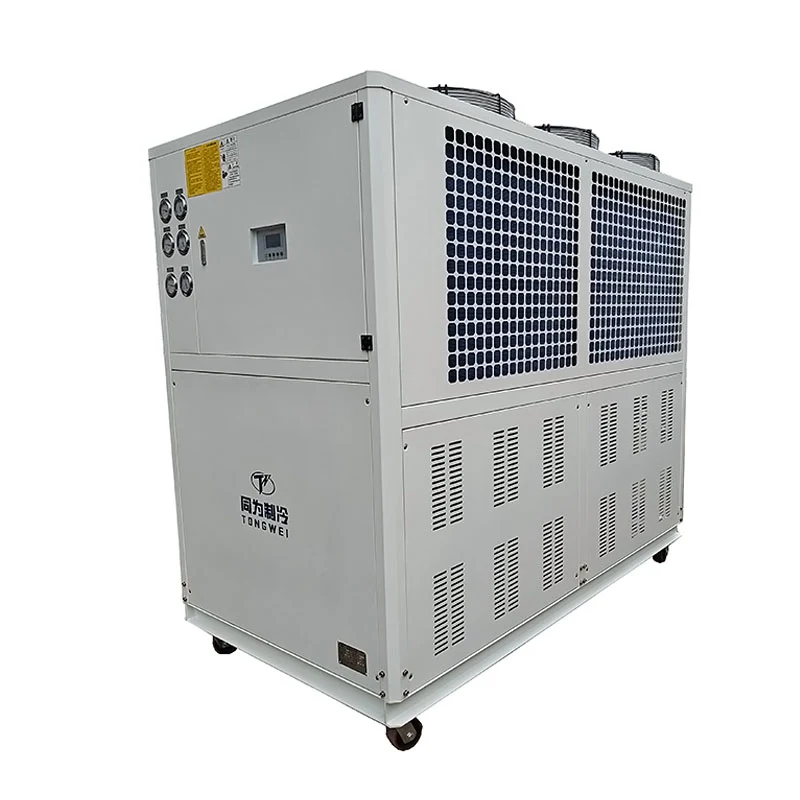
A Low Temperature Glycol Distillery Chiller is an industrial refrigeration system designed to circulate chilled glycol solution at sub-zero or near-zero temperatures to control critical stages of alcohol production.
Unlike standard water chillers, glycol chillers use a mixture of water and propylene or ethylene glycol, allowing safe operation below 0°C (32°F) without freezing. This makes them ideal for:
For more technical system configurations, refer to professional Low Temperature Glycol Distillery Chiller specifications.
Temperature directly affects yeast activity, alcohol yield, flavor development, and final product quality. Even slight fluctuations can cause:
A glycol distillery chiller operates using a vapor compression refrigeration cycle combined with a closed-loop glycol circulation system.
This continuous loop ensures stable process temperature throughout production.
Maintains yeast-friendly temperature range (18–28°C depending on spirit type).
Rapid condensation improves energy efficiency and alcohol recovery rate.
Accelerates production cycles between heating and fermentation stages.
Prevents haze formation in premium spirits and liqueurs.
| Parameter | Standard Water Chiller | Low Temperature Glycol Chiller |
|---|---|---|
| Minimum Temperature | 5°C | -15°C to -25°C |
| Cooling Medium | Water | Glycol-Water Mixture |
| Temperature Stability | ±1–2°C | ±0.5°C |
| Suitable for Alcohol Production | Limited | Excellent |
| Freeze Protection | No | Yes |
Determine minimum operating temperature based on product requirements.
Choose modular systems for future expansion.
Look for high COP (Coefficient of Performance) systems.
Investing in high-efficiency systems reduces long-term operating costs by up to 30%.
Tongwei specializes in advanced industrial refrigeration solutions tailored for breweries and distilleries. With years of engineering expertise, Tongwei provides:
Tongwei systems are engineered for durability, precision control, and long-term performance, helping distilleries scale confidently.
Typically 30–40% propylene glycol depending on minimum temperature requirements.
Yes, with proper pump sizing and manifold distribution systems.
Usually between 18°C and 28°C depending on yeast strain.
With proper maintenance, 10–15 years or more.
Air-cooled is easier to install; water-cooled offers higher efficiency for large-scale operations.
A Low Temperature Glycol Distillery Chiller is not just equipment—it's a strategic investment in product quality, operational stability, and production efficiency. Whether you're launching a craft distillery or expanding an industrial alcohol plant, selecting the right glycol cooling system ensures consistent fermentation, optimized energy consumption, and long-term profitability.
If you're looking for reliable, high-performance distillery cooling solutions, Tongwei offers customized engineering support and advanced low-temperature systems tailored to your production goals. Contact us today to discuss your project and discover how we can elevate your distillery's performance.
Copyright © 2023 Guangdong Tongwei Machinery Co., Ltd. All Rights Reserved.
Links Sitemap RSS XML Privacy Policy