Copyright © 2023 Guangdong Tongwei Machinery Co., Ltd. All Rights Reserved.
Links Sitemap RSS XML Privacy Policy
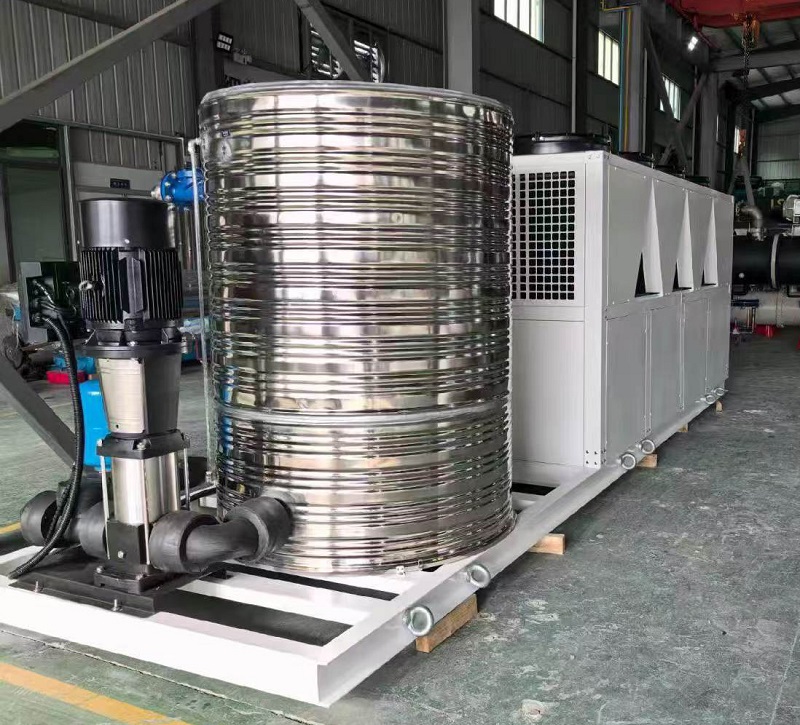
A skid-mounted integrated chiller is a complete water cooling system in which major components, including the refrigeration compressor, condenser, water pumps, buffer tank, heat exchangers, pipeline valves, instrumentation, electrical control systems, and control panel, are pre-installed on a structural skid frame at the factory.
Available in cooling capacities ranging from 10 tons to 100 tons, these systems can be configured with either air-cooled or water-cooled designs. Depending on project requirements, available refrigerants include R32, R513A, R407C, R410A, and R134a.
Unlike conventional cooling systems that require separate equipment installation and extensive on-site piping work, an integrated skid-mounted design brings the major components together into one packaged unit. This helps end users simplify installation, shorten commissioning time, and reduce on-site engineering work.
Depending on the cooling method and operating environment, skid-mounted integrated chillers are generally available in air-cooled and water-cooled configurations. Each type offers different advantages for industrial cooling projects.
An air-cooled skid-mounted integrated chiller uses ambient air to remove heat from the refrigeration system. Fans installed on the chiller force air across the condenser, transferring heat directly into the atmosphere. This design eliminates the need for an external cooling tower and a separate cooling water source.
It is widely used in industrial process cooling, HVAC systems, food processing plants, pharmaceutical facilities, chemical industries, breweries, plastic processing units, and new energy battery testing applications. It is also suitable for other manufacturing processes that require stable and reliable temperature control.
One of its main advantages is installation flexibility. Since it does not rely on a cooling tower, it is particularly suitable for locations with limited water resources, including arid regions and island facilities. It can also support temporary or phased projects, such as EPC engineering projects, exhibition equipment, and pilot production lines.
Depending on the project layout, the equipment can be installed indoors or outdoors, providing flexibility for different industrial environments.
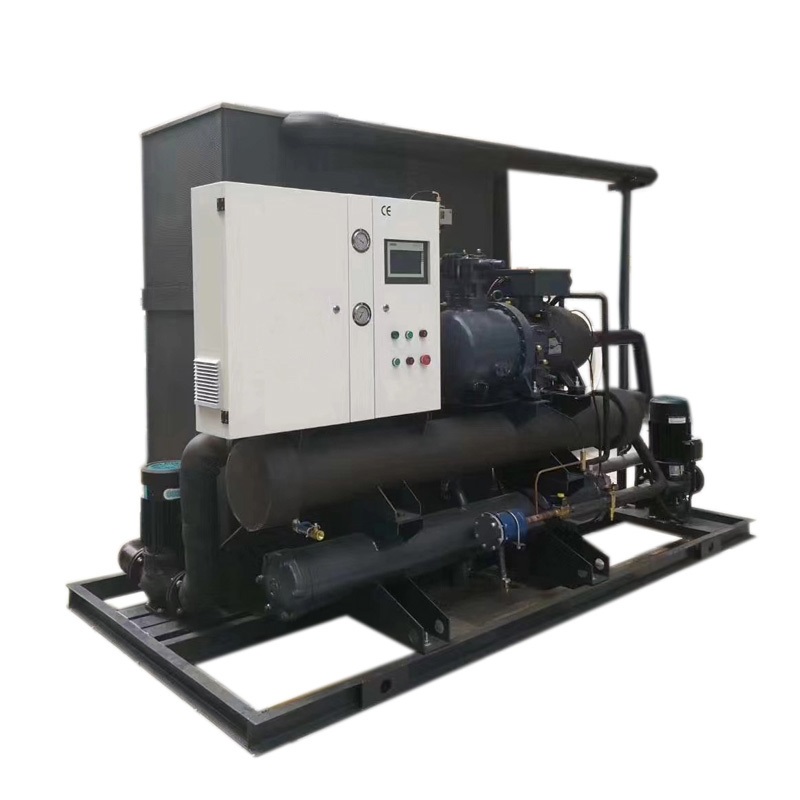
A water-cooled skid-mounted integrated chiller removes heat from industrial processes or cooling water circuits and transfers it to a separate cooling water loop connected to a cooling tower. Compared with air-cooled systems, this configuration uses water as the heat transfer medium on the condenser side.
The integrated system typically includes a shell-and-tube evaporator, condenser, refrigeration compressor, buffer water tank, circulation pump, and electrical controller. These components are assembled on the skid frame before delivery, reducing the amount of installation work required at the project site.
After receiving the equipment, end users can connect the chiller to the corresponding cooling tower and external system piping according to the project design. This arrangement helps simplify system integration and makes it easier to incorporate the chiller into existing industrial cooling facilities.
Water-cooled skid-mounted integrated chillers are particularly worth considering for industrial facilities operating in high ambient temperature environments. With a properly designed cooling tower and sufficient heat rejection capacity, they can provide a suitable cooling solution for projects where ambient temperatures may exceed 50°C. Actual operating performance depends on the system configuration and design conditions.
For industrial buyers and engineering contractors, selecting a cooling system involves more than comparing cooling capacity. Installation requirements, equipment layout, maintenance accessibility, and long-term operating costs also need to be considered. A skid-mounted integrated chiller offers several practical advantages.
All major refrigeration and water circulation components are assembled on a common steel skid base at the manufacturing facility. The system can be pre-assembled and tested before shipment, helping reduce the need for separate component installation and extensive on-site piping work.
Its compact, integrated structure also helps reduce equipment footprint compared with conventional systems that use separately installed components. For projects with limited installation space, this packaged design can make equipment arrangement more convenient.
The equipment is mounted on a sturdy structural steel base, allowing the complete unit to be transported using suitable forklifts or lifting equipment. This makes relocation more convenient when production lines are adjusted, factories are expanded, or temporary cooling facilities are moved to another project site.
For manufacturers and engineering contractors managing multiple projects, the ability to relocate and reuse the equipment can improve asset utilization and reduce the need for repeated equipment purchases.
With the main components arranged within one integrated structure, maintenance personnel can access key equipment more conveniently. Routine maintenance may include cleaning condenser fins, checking compressor operating conditions, inspecting pumps, and examining pipeline valves and electrical connections.
The system can also be configured with a large-capacity stainless steel insulated water tank according to customer requirements. Compared with conventional industrial chillers equipped with smaller standard tanks, a customized buffer tank can provide greater water storage capacity and help accommodate specific process cooling requirements.
Before purchasing a skid-mounted integrated chiller, buyers should evaluate the actual cooling load, installation environment, available water resources, and project requirements.
Air-cooled models are generally suitable for projects where a cooling tower or cooling water supply is unavailable or undesirable. Water-cooled models are worth considering for facilities with an established cooling tower system, particularly where high ambient temperatures make condenser heat rejection an important design consideration.
Other factors, including the required cooling capacity, refrigerant selection, water tank volume, pump specifications, operating temperature, and electrical control requirements, should also be confirmed during the equipment selection process.
Whether you need an air-cooled unit for flexible industrial installation or a water-cooled system for demanding process cooling conditions, a properly configured skid-mounted integrated chiller can help simplify your cooling system layout and installation process.
Contact our team to discuss your cooling capacity, operating conditions, installation environment, and customization requirements. We can help you identify a suitable cooling configuration for your industrial application.
Copyright © 2023 Guangdong Tongwei Machinery Co., Ltd. All Rights Reserved.
Links Sitemap RSS XML Privacy Policy