Abstract: Portable chillers are becoming essential in modern industrial operations, offering flexibility, energy efficiency, and precise temperature control. In this comprehensive guide, we explore the benefits, types, and applications of portable chillers, focusing on Tongwei's innovative solutions.
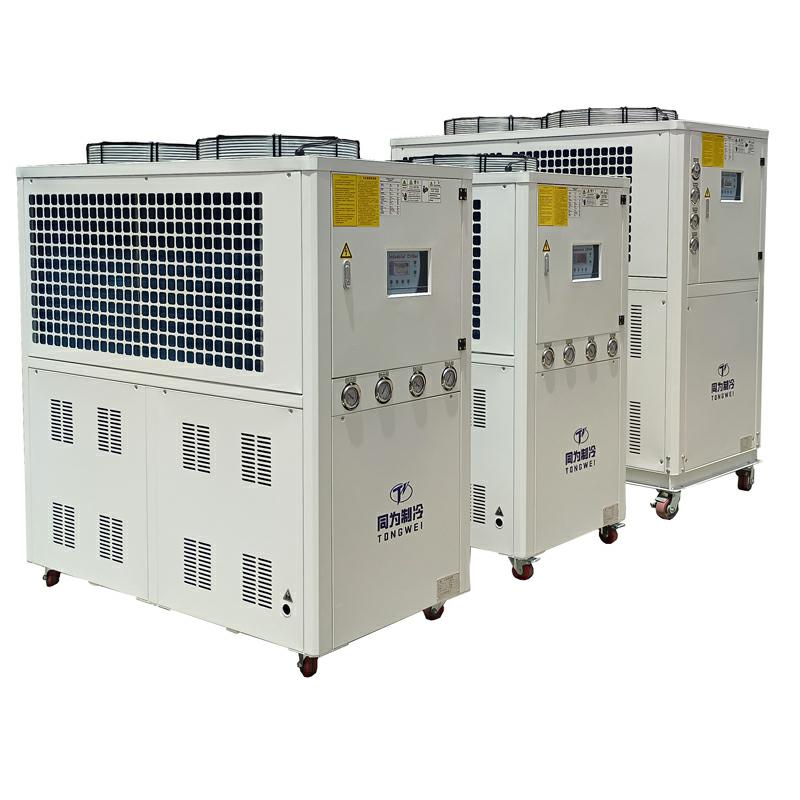
Table of Contents
- What is a Portable Chiller?
- What Are the Types of Portable Chillers?
- What Are the Benefits of Using a Portable Chiller?
- Which Industries Benefit from Portable Chillers?
- How to Choose the Right Portable Chiller?
- What Are the Maintenance Tips for Portable Chillers?
- FAQ About Portable Chillers
- Contact Tongwei
What is a Portable Chiller?
A portable chiller is a compact, self-contained cooling system designed to provide precise temperature control in industrial and laboratory settings. Unlike traditional stationary chillers, portable chillers combine all necessary components—refrigeration circuits, pumps, reservoir tanks, and control systems—into a single unit that can be relocated if needed. Tongwei's portable chillers, often referred to as mini chillers or compact water chillers, deliver high performance in a small footprint, making them ideal for space-constrained applications.
Key Features of Tongwei Portable Chillers
- Cooling capacity from 2KW to 200KW (1/2 ton to 60 tons)
- Air-cooled and water-cooled options
- Advanced temperature stability ±0.1°C
- Energy-efficient operation reducing power consumption by up to 30%
- CE certified with 12-month warranty
What Are the Types of Portable Chillers?
Portable chillers can be broadly categorized into two types based on cooling methods:
Portable Air-Cooled Chillers
These chillers dissipate heat using ambient air. They are ideal for industrial applications where water access is limited. Tongwei offers air-cooled units from 1/2 ton to 50 tons, optimized for fast installation and low maintenance.
Portable Water-Cooled Chillers
Water-cooled chillers use water as the primary medium to remove heat. They provide higher efficiency in environments with consistent water supply and are widely used in plastics, chemical processing, and beverage bottling industries.
Comparison Table of Chiller Types
| Type | Cooling Method | Best For | Energy Efficiency |
|---|---|---|---|
| Air-Cooled | Ambient air | Limited water availability, general industrial use | Moderate |
| Water-Cooled | Water circuit | High-load industrial processes, plastics, chemical processing | High |
What Are the Benefits of Using a Portable Chiller?
Investing in a portable chiller offers several advantages:
1. Mobility and Compact Design
Despite being called portable, most Tongwei chillers are designed for easy relocation rather than constant movement. Their compact footprint allows placement near critical processes.
2. Energy Efficiency
Portable chillers consume less power due to advanced variable-speed compressors and optimized refrigeration circuits. Tongwei's units reduce energy costs by up to 30%.
3. Precise Temperature Control
Modern chillers maintain tight tolerances, often within ±0.1°C, which is critical for laser systems, laboratory operations, and small-scale production lines.
4. Reduced Installation and Maintenance Costs
As self-contained systems, portable chillers eliminate the need for extensive piping and external components. Tongwei provides comprehensive after-sales support to ensure long-term performance.
Which Industries Benefit from Portable Chillers?
Portable chillers are versatile and can support multiple industrial sectors:
- Plastic Industry: Cooling injection molds, blow molding, and extrusion machines.
- Beverage Processing: Bottling and fermentation temperature control.
- Pharmaceutical & Chemical: Reaction vessel and lab cooling.
- Metal Processing: Die casting and machining operations.
- Laboratory & Laser Systems: Precise thermal management for experiments and laser cooling.
How to Choose the Right Portable Chiller?
Choosing the right chiller depends on several factors:
- Cooling Capacity: Determine the required BTU/hr or KW for your process.
- Cooling Method: Air-cooled for convenience, water-cooled for efficiency.
- Temperature Stability: High-precision applications require ±0.1°C control.
- Space and Footprint: Ensure the unit fits your production layout.
- Maintenance and Support: Tongwei provides professional pre-sales and after-sales support worldwide.
What Are the Maintenance Tips for Portable Chillers?
Maintaining a portable chiller ensures longevity and consistent performance:
- Regularly clean air filters and condenser coils.
- Check refrigerant levels and pressure monthly.
- Inspect water pumps, hoses, and connections for leaks.
- Ensure electrical connections are secure and free from corrosion.
- Schedule professional service annually for calibration and safety checks.
FAQ About Portable Chillers
Q1: Can portable chillers be used outdoors?
Yes, air-cooled chillers can operate outdoors but should be protected from extreme weather conditions. Water-cooled chillers require a water source nearby.
Q2: How long is the warranty for Tongwei portable chillers?
Tongwei offers a 12-month warranty covering manufacturing defects and provides spare parts even after many years of operation.
Q3: Are portable chillers energy-efficient?
Absolutely. Tongwei units utilize variable-speed compressors and energy-saving technologies, reducing consumption by up to 30% compared to traditional chillers.
Q4: What industries benefit the most from portable chillers?
Industries like plastics, chemical processing, pharmaceuticals, beverage bottling, and laboratories see the highest benefits due to precise cooling needs.
Contact Tongwei
If you're ready to optimize your industrial cooling with high-performance portable chillers, contact us today. Tongwei provides tailored solutions, fast shipping, and reliable support worldwide. Upgrade your processes, save energy, and ensure precise temperature control with Tongwei portable chillers.